
 EN
 HR
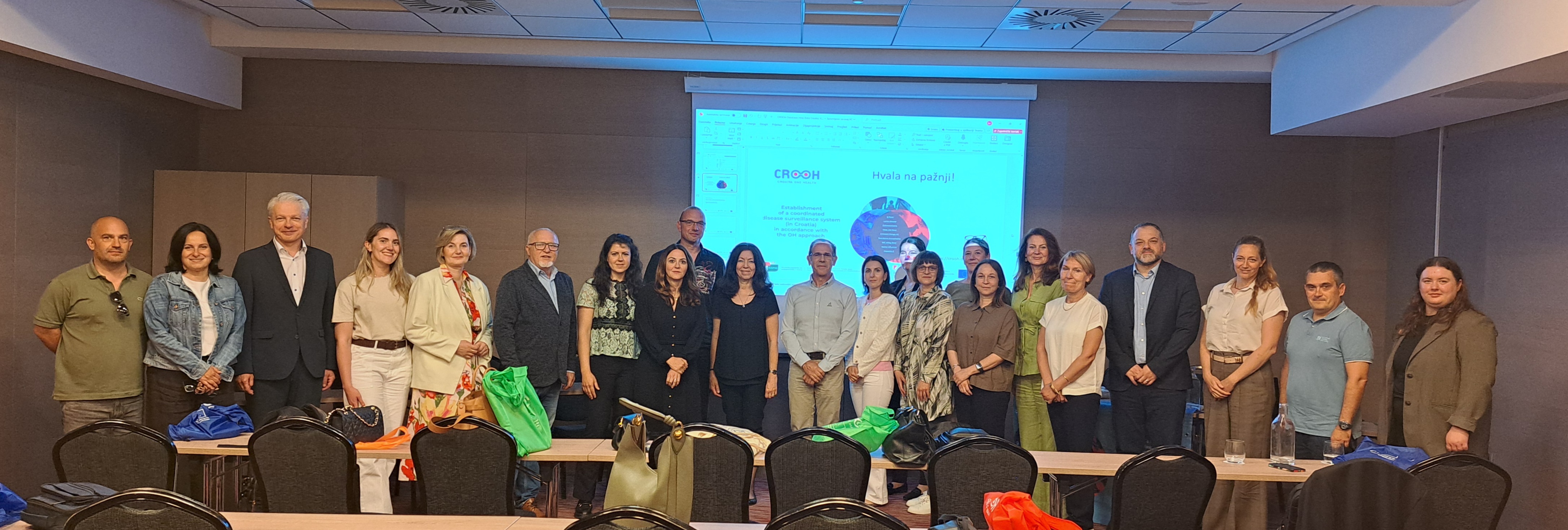
As part of the CROOH project, a workshop dedicated to the national zoonotic disease surveillance system was held in Trakošćan on 2 June 2026 within the framework of Work Package 6 (WP6). The event brought together representatives of institutions involved in the One Health approach, as well as experts from the veterinary medicine, public health, and ecology.
Representatives of the Veterinary and Food Safety Directorate of the Ministry of Agriculture, Forestry and Fisheries, and the Croatian Agency for Agriculture and Food officially opened the workshop. This was followed by a series of presentations showcasing the achievements of the CROOH project during its first two years of implementation (2024–2025). Participants were introduced to the latest results of zoonotic disease surveillance in domestic and wild animals, including newly developed methodological approaches and progress in establishing a national database.


The introductory presentation highlighted the results of pathogen surveillance in ticks, together with findings on the occurrence of Echinococcus granulosus sensu lato in dogs and wild canids. These activities represent an important component of the national early warning system for zoonotic diseases, particularly in the context of climate change and the expanding distribution of vector species.
Work Package 3 (WP3), one of the project’s core components, focused on optimizing sampling strategies and disease surveillance in domestic animals. Surveillance results were presented for swine influenza, West Nile virus, tick-borne encephalitis, hepatitis E, Q fever, Crimean-Congo haemorrhagic fever, and Rift Valley fever.
Particular attention was devoted to presenting Crimean-Congo haemorrhagic fever surveillance results, as the virus was confirmed in Croatia for the first time within the framework of the project. This finding represents a significant contribution to understanding emerging zoonotic threats in the region.
The workshop also presented the results of analyses for Coxiella burnetii, the causative agent of Q fever, in samples collected from domestic ruminants and farm environments. These findings underscored the importance of an integrated surveillance approach that links animal, environmental, and human health.


A key presentation explored the role of climatological indicators in predicting the occurrence and spread of zoonotic diseases. Using West Nile fever as an example, the speaker demonstrated how monitoring daily temperatures and other climatic parameters can enhance predictive models and strengthen the effectiveness of the One Health surveillance system.

The workshop concluded with the presentation of the CROOH database, a central platform designed for the collection, analysis, and exchange of data on zoonotic pathogens. Participants emphasized that high-quality, well-structured data are essential for timely decision-making, accurate risk assessment, and effective management of public health threats.

Each presentation was followed by an engaging and expert discussion, fostering the exchange of knowledge and experiences among participants. The workshop proved to be a valuable platform for strengthening collaboration and generating momentum for future activities aimed at improving the national zoonotic disease surveillance system.
In the closing session, participants summarized the key conclusions and highlighted the need for the continued development of a coordinated, integrated, and sustainable disease surveillance framework in the Republic of Croatia. Particular emphasis was placed on strengthening intersectoral cooperation and ensuring the continuous exchange of information among the veterinary, public health, and environmental sectors, fully reflecting the principles of the One Health approach.

